An international crisis is hitting our coral reefs more than ever, even in the most remote places.
Reefs across the world that were once known as colorful and full of life are now white and almost barren due to coral bleaching.
Coral bleaching, according to The National Oceanic and Atmospheric Administration (NOAA), is when coral becomes stressed due to changes in its conditions. These changes include nutrients, water temperature, and sunlight exposure.
Mauritius, an island off the coast of Africa that was known for these incredible beaches has also suffered at the hands of coral bleaching, with the effects ramping up as climate change has affected our world.
In March of 2019, I had the opportunity to travel to Mauritius with my program. Since we set sail in San Diego and moved our way through Asia, my shipmates and I learned about the harsh effects climate change had on our environment through our classes and guest speakers who sailed with us between ports. We learned about coral bleaching and plastic polluting our oceans as well as seeing plastic floating between our travels, but it wasn’t until Mauritius when I saw true coral bleaching.
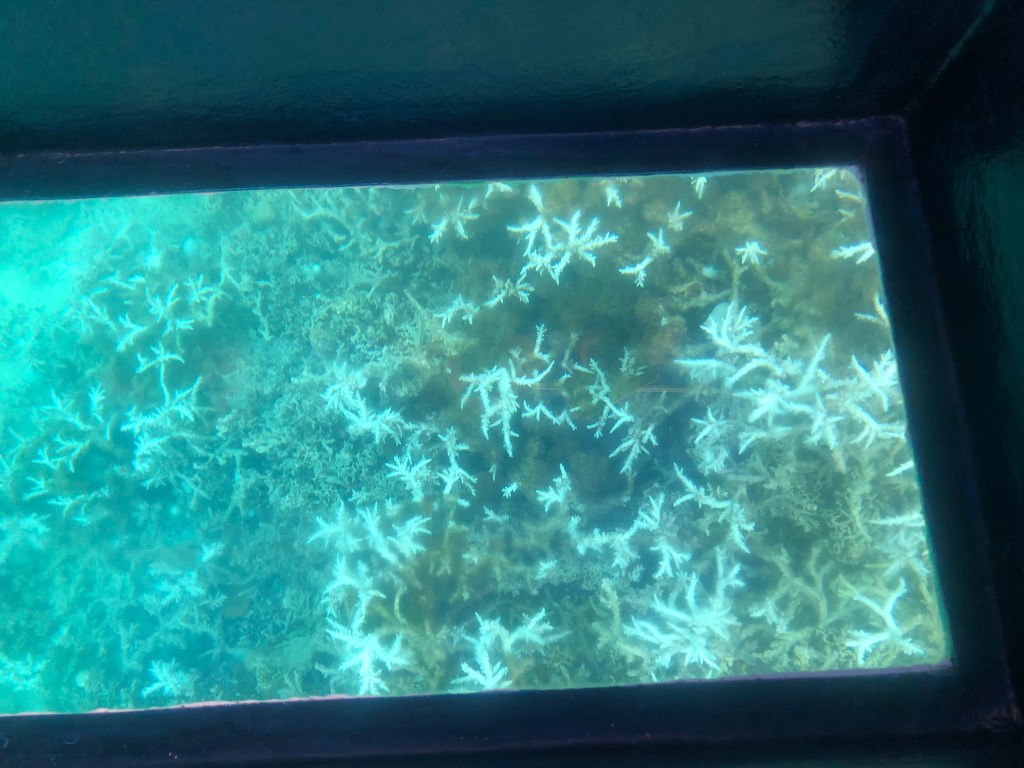
When we arrived on the island and into the city of Port Louis, there was plenty of greenery and free land, but when we got to the beach, the underwater environment was not the same. The water was beautiful, but all of the coral close to the water’s surface was dead. Not only was the coral dying, but there were plastic bottles within the coral, which meant no fish were around to create an ecosystem to keep these corals alive.
According to reefconservation.mu, the conservation site for Mauritius, there have been multiple reasons why the reefs have bleached, but tourism has been one of the main reasons.
“Tourism also has its direct and associated impacts, with snorkel and dive boats dropping anchors and breaking the coral. The collection of shells and corals for sale to visitors has depleted the number of shells and people holding, walking and sitting on coral all contribute to the demise of the lagoon habitats the visitors have come to see,” according to the website.
Although coral bleaching has been increasing among reefs around the world, there is hope to save them. According to the EPA’s website, a few of the ways to keep coral bleaching include safe diving and snorkeling, like not hitting coral with your feet or accidentally sitting on it, as well as wearing sustainable sunscreen which is free from harmful reef chemicals. To be more conscious every day, recycling and spreading the word about coral bleaching helps bring awareness to places who don’t live with the everyday effects of the bleaching.
For other articles about coral beaching around the world:
 Coming Home With Katie